Tub & Shower Remodeling in the Quad Cities
Bathtub replacement, shower replacement, walk-in showers, walk-in tubs and tub-to-shower conversions for homeowners who want a bathroom that works better and looks finished.
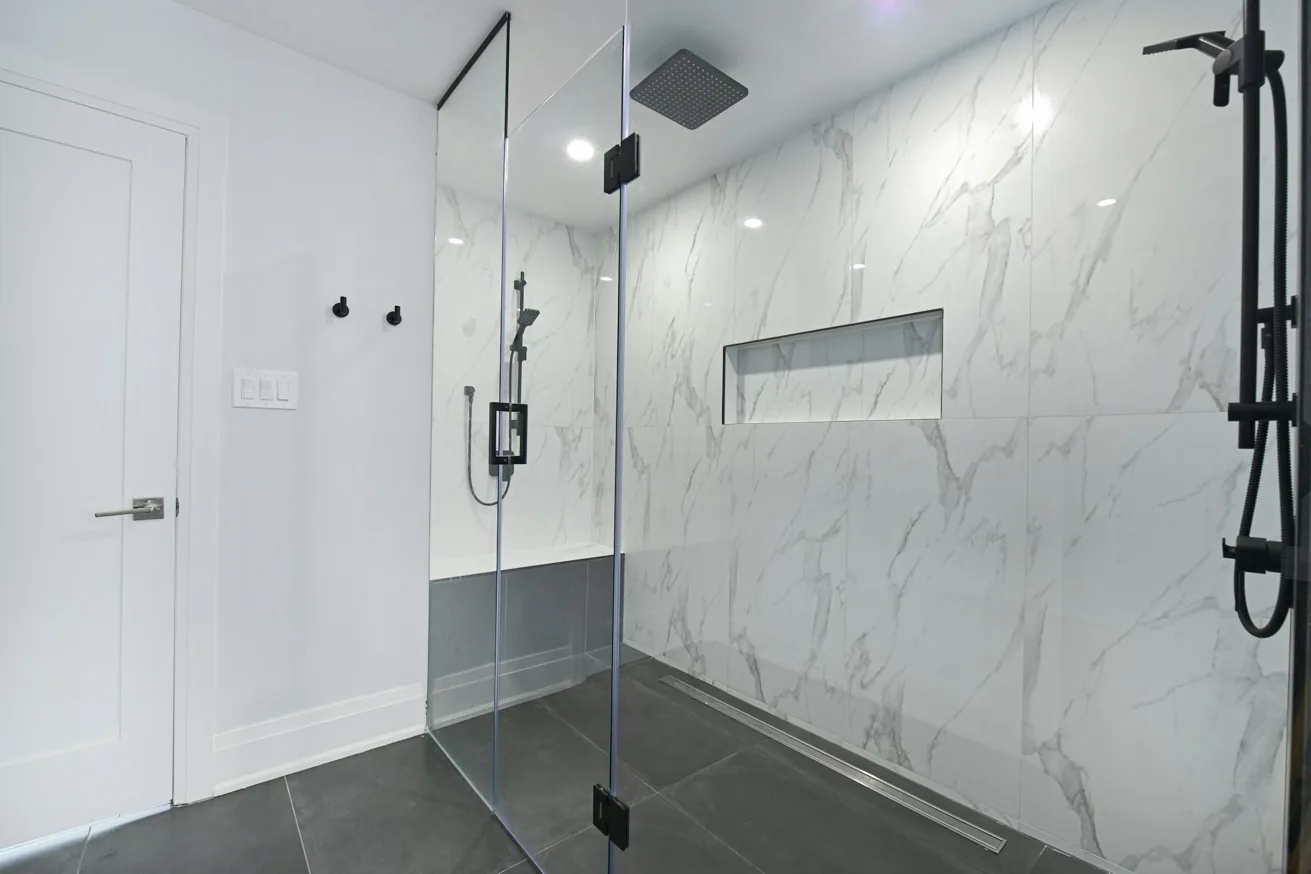
A tub or shower can change the way an entire bathroom feels. Replacing an outdated tub, converting a tub to a shower, installing a larger shower, or rebuilding a worn shower area can improve everyday use without necessarily requiring a complete bathroom gut remodel. For larger projects, this service connects directly to our Bathroom Remodeling service.
Tub and Shower Remodeling Services
We organize tub and shower work around the way homeowners actually remodel. Some projects are straightforward replacement jobs.
Bathtub Replacement
Replace an old, stained, damaged or difficult-to-clean tub with a new bathtub and updated surround, fixtures and finish materials.
Shower Replacement
Update an existing shower with new walls, base, doors, fixtures, shelving, niche storage or a new configuration.
Tub-to-Shower Conversion
Remove a traditional tub and create a more usable shower, including options for larger openings, seating and easier entry.
Walk-In Shower Installation
Design a shower around the available footprint, with choices for low-threshold entry, glass, tile, shelving and handheld fixtures.
Walk-In Tub Remodeling
For homeowners who prefer a tub but want easier entry, a walk-in tub can be incorporated into a bathroom renovation.
Shower and Tub Surrounds
Replace worn surrounds and address the materials, waterproofing and finish details around the wet area.
Should You Replace the Tub or Convert It to a Shower?
That depends on how the bathroom is used. A tub can still make sense for households with young children or homeowners who enjoy bathing. A shower can be more convenient for daily use, particularly when the existing tub is difficult to step over.
A tub-to-shower conversion is also an opportunity to reconsider the footprint.Keeping plumbing near its current location can reduce the complexity of a project, while moving drains or supply lines can increase the scope.
For homeowners who are unsure which direction makes sense, an evaluation of the existing bathroom is more useful than choosing fixtures first. The condition of the subfloor, walls, plumbing, ventilation and surrounding finishes can all affect the practical choices.
What a Tub or Shower Remodel Can Include
A professional project may involve considerably more than setting a new fixture. Depending on the condition of the bathroom and the scope selected, work can include demolition and removal, preparation of walls and floors, plumbing adjustments, shower or tub installation, waterproofing, tile or wall panels, shower doors, glass, trim, shelving, niches, benches, faucets, showerheads, handheld sprays, drains, lighting and finish work.
Electrical work can become part of the project when lighting, heated features, ventilation or other fixtures are being changed. Ventilation deserves attention in a bathroom because steam and moisture need a reliable path out of the room. A remodel is a good time to address an undersized or poorly located exhaust fan when the existing conditions call for it.
Waterproofing Matters
The finished surface is what homeowners see, but the layers underneath the shower are what help protect the structure. A shower renovation should account for water management at the walls, corners, transitions, penetrations and floor or shower pan. Tile itself is not a substitute for a properly planned waterproofing system.
This is especially important when an existing shower has had recurring leaks, soft walls, damaged flooring or staining. Those conditions can mean the visible problem is only part of the repair. Before covering the area with new materials, the underlying condition should be understood.
Choosing a Tub, Shower Base, Wall System or Tile
There is no single material that fits every bathroom. Acrylic and other manufactured surrounds can provide a lower-maintenance surface and a relatively straightforward installation. Tile offers a much wider range of sizes, patterns, colors and textures but requires careful preparation and installation. Large-format tile can reduce grout lines, while smaller formats can provide design flexibility and slip-resistant options on appropriate surfaces.
Shower doors also affect the finished room. Clear glass can make a compact bathroom feel more open, while framed or semi-frameless options can provide a different look and budget point. A curtain can remain a practical choice in some bathrooms.
Storage, Seating and Everyday Function
Remodeling the shower is an opportunity to solve small frustrations that homeowners live with for years. A properly positioned niche can keep bottles off the floor.A bench or fold-down seat can make the shower more comfortable, and a handheld shower can improve flexibility.
These decisions should be made before the walls are finished because plumbing, framing and waterproofing details can be affected by the final layout. The same is true for grab bars and other support features: planning for them early is easier than trying to retrofit structural support later.
How Much Does Tub or Shower Remodeling Cost?
There is no responsible single price for every tub or shower project. Homeowners are paying for a combination of demolition, preparation, labor, plumbing, waterproofing, finish materials and fixtures, and the range can change substantially based on the existing bathroom.
A straightforward replacement that keeps the existing footprint is different from a full shower reconstruction with new plumbing, waterproofing, tile, glass, electrical work and repairs behind the walls. Material selections also matter. A stock shower base and surround, custom tile, specialty glass, premium fixtures and custom storage each affect the final project.
When comparing estimates, look at the scope rather than only the bottom-line number. Ask whether demolition, disposal, plumbing, waterproofing, wall preparation, tile, fixtures, trim, cleanup and finish work are included. Two estimates can appear very different because they are describing different projects.
The Remodeling Process
- Evaluate the existing bathroom. The current tub or shower, plumbing, walls, floor and ventilation are reviewed along with what you want changed.
- Choose the direction. Decide whether the project is a replacement, shower upgrade, tub-to-shower conversion, walk-in shower or larger bathroom renovation.
- Plan materials and fixtures. Select the tub or shower base, wall finish, tile or surround, doors, fixtures, storage and other components.
- Prepare the work area. Existing fixtures and finishes are removed as needed, and the underlying area is prepared for the new installation.
- Complete the wet-area work. Plumbing, framing, waterproofing and the new tub or shower components are installed according to the project scope.
- Finish the room. Tile, wall surfaces, doors, fixtures, trim and related bathroom work are completed and the area is cleaned up.
Bathroom Remodeling Beyond the Tub or Shower
A tub or shower project often touches other parts of the bathroom. If you are replacing the vanity at the same time, see our Bathroom Vanity Installation page. If the sink itself needs replacement or plumbing work, see Sink Installation & Repair. For a larger room renovation, our Bathroom Remodeling page covers the broader scope.
Homeowners considering work in another part of the house can also see Kitchen Remodeling. Related kitchen pages include Kitchen Cabinets, Kitchen Countertops, Kitchen Islands, Kitchen Backsplashes, Kitchen Lighting & Electrical, Kitchen Flooring and Kitchen Plumbing & Appliances. Keeping related work coordinated can make sense when flooring, plumbing, electrical or other trades overlap.
Remodeling Across the Quad Cities
Housing age and room layouts vary throughout the region. For community-specific context, see the dedicated pages for Davenport, Bettendorf, Moline, Rock Island, East Moline, Silvis, Milan, Eldridge and LeClaire.
Questions Homeowners Ask About Tub and Shower Remodeling
Can I convert my bathtub to a walk-in shower?
Often, yes. The feasibility depends on the existing footprint, drain location, plumbing, floor condition and the shower configuration you want. Keeping the basic plumbing location can simplify the project, while moving it can add work.
Is it cheaper to replace a tub or convert a tub to a shower?
There is no universal answer. A straightforward replacement may require less construction than a conversion, but the final price depends on demolition, plumbing, wall work, waterproofing, enclosure, fixtures and materials.
Can I keep my existing bathroom layout?
Yes. Many bathroom projects retain the toilet, vanity and basic tub or shower footprint. Keeping the layout can reduce the amount of plumbing and reconstruction required, although the existing conditions still need to be checked.
Do I need to replace the whole bathroom to replace my shower?
No. A shower can often be remodeled as a focused project. If the surrounding flooring, vanity or other fixtures are also outdated, combining the work may be more efficient, but a full-room remodel is not automatically required.
How long does a tub-to-shower conversion take?
Project time depends on the scope, material availability, demolition, plumbing changes and whether hidden damage is found. A simple conversion and a custom tiled shower are very different projects, so the schedule should be based on the actual scope rather than a generic number of days.
Should I choose tile or a shower wall system?
Both can work well. Tile provides broad design flexibility, while manufactured wall systems can offer fewer grout joints and easier maintenance. The right choice depends on appearance, maintenance preferences, budget and the existing bathroom.
Can I install a new vanity or sink while the shower is being remodeled?
Yes. Coordinating related work can make sense when several bathroom components need updating. See our vanity installation and sink installation and repair services.
What should I ask for in a remodeling estimate?
Ask what demolition, disposal, preparation, plumbing, waterproofing, fixtures, finish materials, labor, cleanup and permits are included. Homeowners comparing estimates often discover that different contractors have priced different scopes.
Plan Your Tub or Shower Remodel
If your current tub or shower is outdated, difficult to use, damaged or simply no longer fits the way you use the bathroom, start with the actual project rather than a generic package. Tell us what you have now, what you want to change and where the property is located.
For a complete bathroom renovation, start with Bathroom Remodeling. For a focused tub or shower project, use the request form or call to discuss the work.